I run The Chimney Experts INC, and chimneys are the whole business. Allison Park sits on my regular North Hills run, so I am up Route 8 most weeks through the heating season. When you call about a liner here, either I come out or my team does, and the flue gets the same look either way.
Relining is what you do when the inside of the chimney has stopped doing its job. The flue is the passage that carries smoke and combustion gas up and out of the house. On most older Allison Park chimneys that passage is clay tile, built in sections with mortar joints between them, and clay tile cracks, shifts, and loses those joints over time. Once that happens, sweeping does not fix it. A stainless steel liner replaces the passage itself with one continuous pipe from the appliance to the top of the chimney.
Allison Park is not its own borough. It is the community and the mailing address that covers Hampton Township in the North Hills of Allegheny County, and the chimneys here often carry two or three flues coming up through one crown. That matters on a liner job, because the flue you are relining has neighbors right next to it, and they all share the same crown and the same weather.
☎ Call (412) 440-5871 Get a Free Estimate
Why a Fireplace Flue Ends Up Needing a Liner
Water starts most of it. A cracked crown or a flue left open with no cap lets rain down into the stack. The water soaks into the masonry and into the tile, and when it freezes it expands and pushes things apart. Freeze and thaw works on a flue from the inside the same way it works on brick from the outside, and because a chimney is the one part of the house standing out in the weather on all four sides, it takes that abuse harder than anything else. The joints between the tiles go first, then the tiles themselves.
A chimney fire is the fast version. Enough heat in a flue can crack clay tile the whole way up in a single event, and a chimney that looks perfectly normal from the driveway can be broken from the smoke chamber to the crown.
The last reason is fit. A flue that was sized for one appliance is often wrong for the one that replaced it. If your fireplace, furnace, or water heater has been swapped out since the chimney was built, the flue it vents into may be too large, too cold, or no longer right for what is attached to it. That is a liner job, not a repair.
Either way, the way to know is to get on the chimney and go through the flue by hand. I work from hands-on access rather than any destructive testing, and I tell you what I actually found. There is a fuller rundown of the general process on my chimney relining page.
A Stainless Steel Fireplace Relining My Team Did in Allison Park
The photos below are from an Allison Park chimney my team relined.
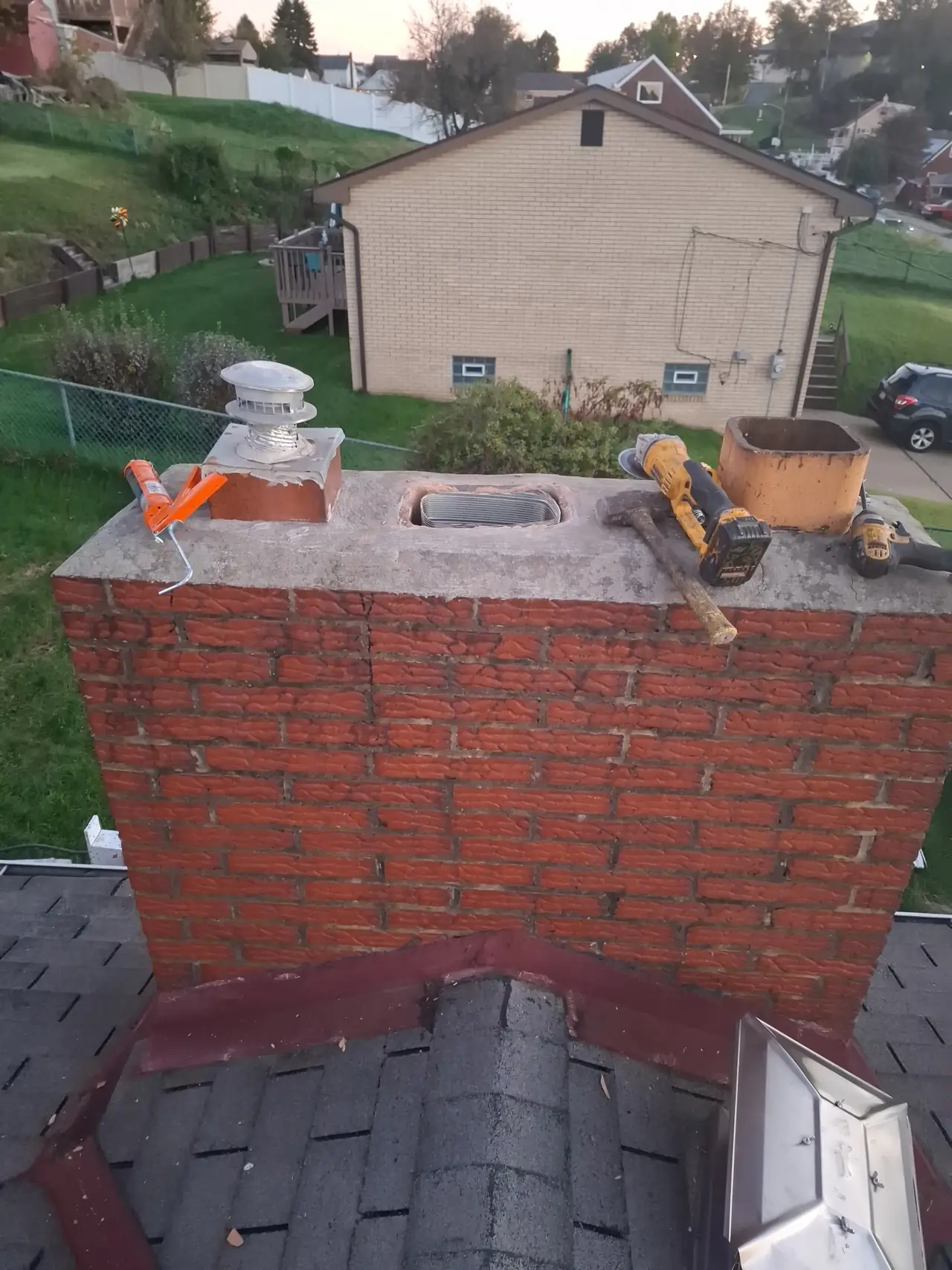
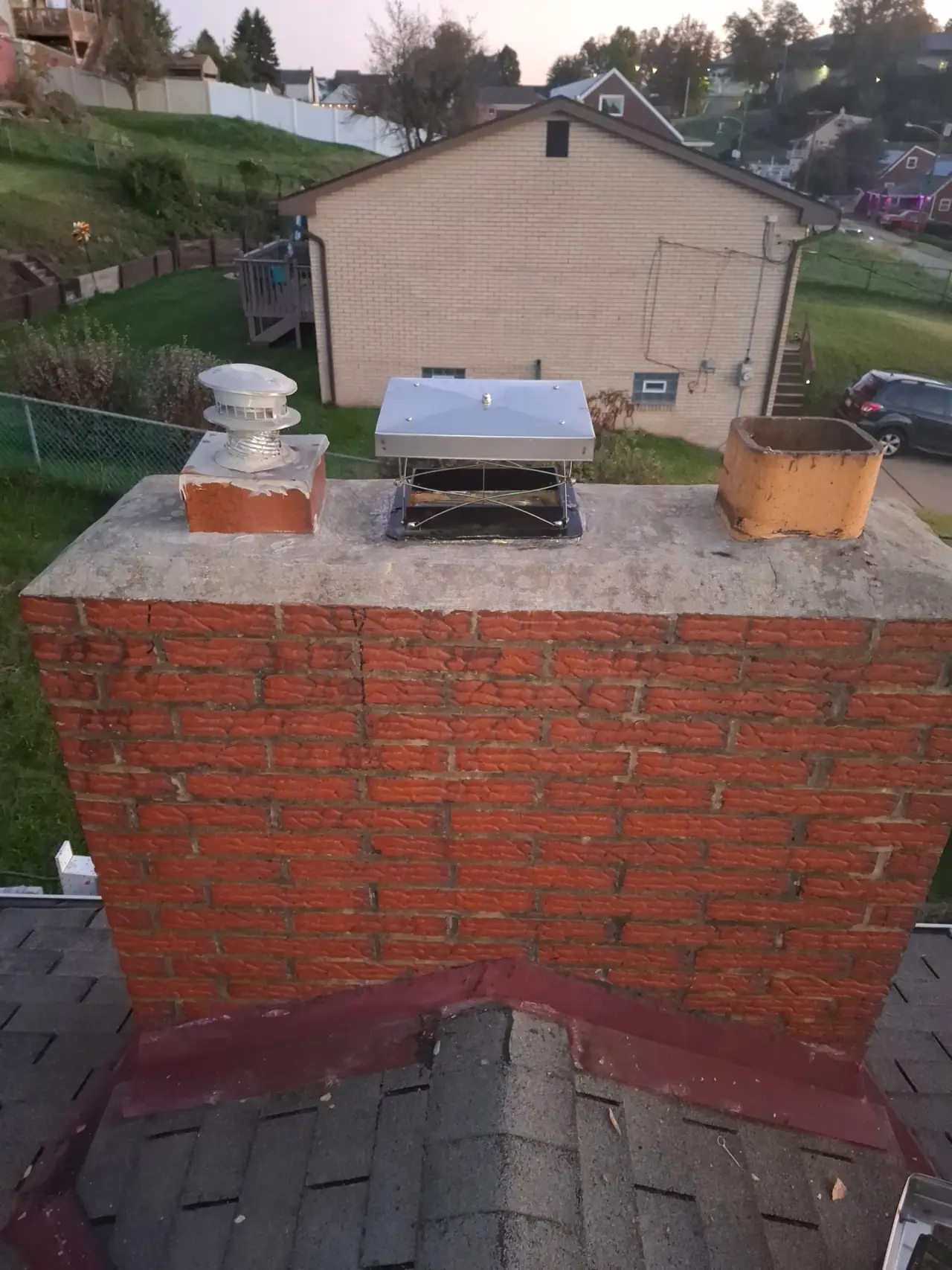
It is a brick stack with three separate flues coming up through one poured crown. On the left, a gas appliance flue under a round vent cap. In the middle, the fireplace flue. On the right, a clay tile standing proud of the crown. One chimney, three different things happening inside it.
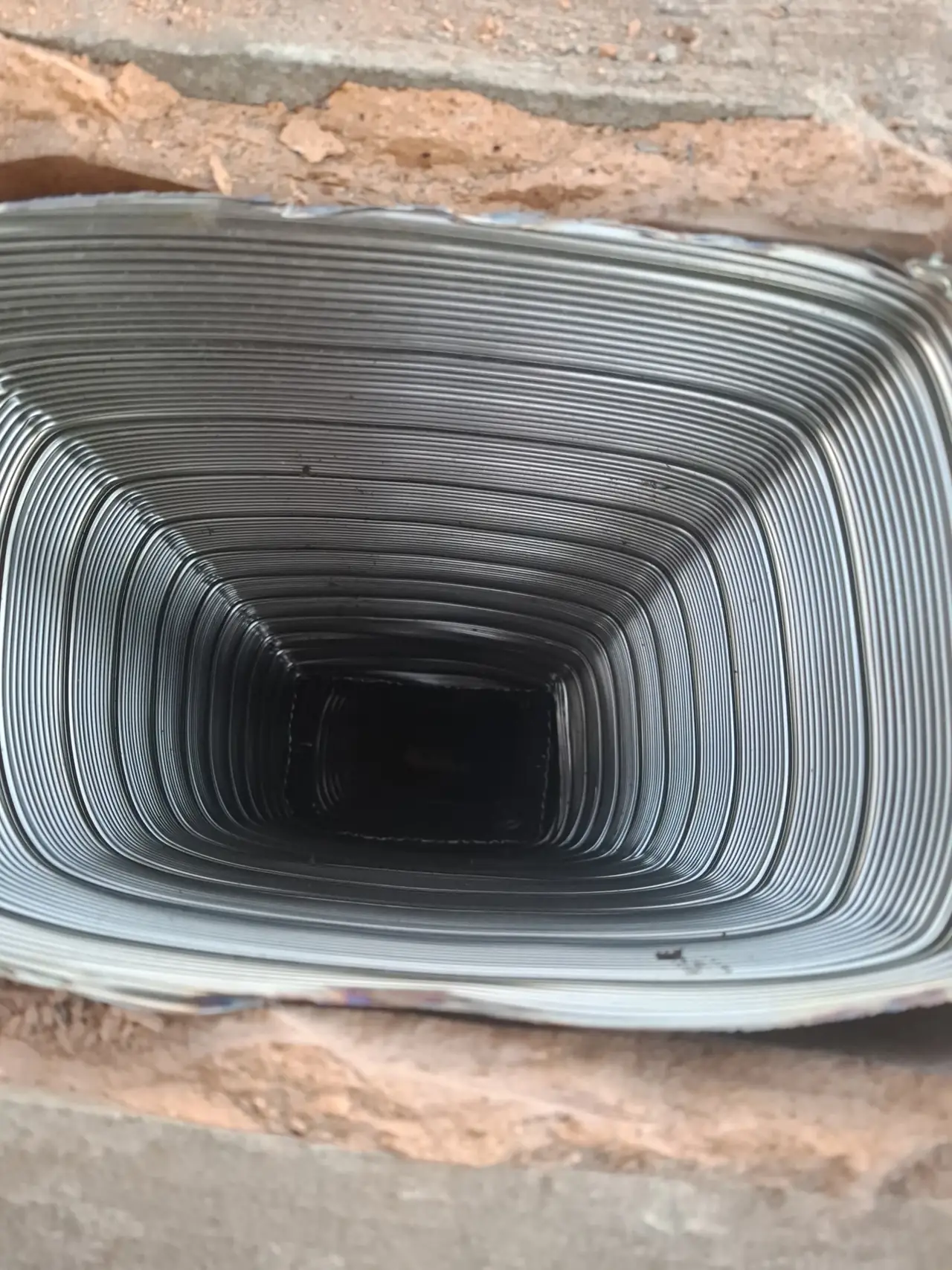
They relined the chimney and replaced the old flue. A flexible stainless steel liner went down the fireplace flue from the crown all the way to the bottom, so the fireplace vents through one unbroken piece of stainless now instead of through a stack of tile sections with joints between them. At the top, the liner was sealed to the crown with a top plate. That plate locks the liner in position and closes off the gap between the new liner and the old tile around it, so water running across the crown cannot get down inside the stack.
Then a new top-mount damper went on over it. That is the piece sitting on the crown in the finished photo. It seals the flue from the very top when it is closed, opens on a cable from the firebox when you want a fire, and doubles as the cap and the spark arrestor the rest of the time. The old damper down in the firebox never sealed much even when it was new, so moving the seal to the top of the chimney is the better place for it.
Two things on that crown were left the way they were. The clay tile flue on the right is still standing open with nothing over it. And there are cracks running through the crown itself, which is the opening water uses to get into a stack in the first place.
How a Liner Goes Into a Multi-Flue Allison Park Stack
A three-flue chimney like the one above is normal around here, and it changes the order of the work.
Sizing It to the Fireplace
The liner has to match what it is venting. Too small and the fireplace will not draft, so smoke comes back into the room. Too large and the flue runs cold, the smoke cools on the way up, and you get creosote laying down faster than it should. The firebox opening and the height of the chimney are what set the size, and that gets measured before anything is ordered, not guessed at on the roof.
Running It the Full Length
A liner is only worth putting in if it goes the whole way. The run starts at the connection down at the bottom and finishes at the crown, with nothing in between for gas to leak out of. Flexible stainless is what handles that on an older masonry flue, because it will follow an offset or a bend in the stack where a rigid pipe would stop.
Sealing the Top
The top plate is the part people do not see and the part that keeps the job from undoing itself. It sits on the crown, the liner clamps through it, and it bridges the space between the new liner and the old tile it is sitting inside. Without it, rain runs straight down the gap between liner and tile and sits in the bottom of the chimney. A cap or a top-mount damper then goes on over the plate to keep rain, leaves, and animals out of the liner. There is more on both on my chimney cap page.
The Flues Next Door
Relining the fireplace flue does nothing for the one beside it. On the Allison Park chimney above, the gas appliance flue has its own vent cap and the clay tile on the right is open to the sky. Each flue has its own liner, its own cap, and its own path down to its own appliance. I go over every flue on the stack and tell you where each one stands, so you are not left thinking one job covered three.
The Crown Over All of Them
Every flue on a stack shares the crown, so cracks in the crown are everybody’s problem. If the crown is letting water into the masonry, that keeps working on the brick and on any tile still in there no matter how good the new liner is. Sometimes crown work goes with a reline and sometimes it is the next visit, but it gets looked at either way, and I walk through a full crown job in this crown repair write-up.
Fireplace Liners and Gas Appliance Liners Are Not the Same Job
Both get called relining, and they are not the same work. A fireplace liner, like the Allison Park job on this page, is sized to a firebox and has to carry wood smoke and the creosote that comes with it. A liner for a gas furnace or water heater is sized to the appliance instead, and the problem it solves is usually a flue that is far too big and too cold for a modern high-efficiency unit, which makes acidic condensate that eats clay tile from the inside. If what you are dealing with is on the gas side, including an orphaned water heater venting alone into an old flue or an oil-to-gas conversion, my gas furnace and water heater liner page is the one to read. When you call, tell me which appliance the flue serves and I will know what we are looking at.
Chimney Liner Work Across Allison Park and the North Hills
Allison Park and Hampton Township are on my regular run, and I cover the townships around them on the same trips: Shaler Township, McCandless, Indiana Township, Richland Township, West Deer, Gibsonia, and Glenshaw. I am in Wexford and the Pine-Richland area on the same days, and across the river I work Fox Chapel and the Allegheny Valley. If a neighbor wants a look at theirs too, say so when you call and I will put you back to back.
If your fireplace is smoking into the room, your flue has not been looked at in years, or an inspection came back saying the liner is bad, that is the call to make. Getting on the chimney, going through the flue, and writing up what it needs costs you nothing.