Water is the number one thing that destroys chimneys around here. Not fire, not age. Water. And the part standing between the rain and the guts of your chimney is one most homeowners have never heard of: the crown. When it fails, water gets a way in, and the repair bill climbs every winter you wait. That is why chimney crown repair in Pittsburgh is one of the most important fixes I do, and one of the cheapest if you catch it early.
I have been up on a thousand roofs in this area. The crowns that get ignored are the ones that turn into four-figure jobs. So let me walk you through what the crown is, how it fails, and what it actually costs you when it does.
What Is a Chimney Crown?
The chimney crown is the slab of concrete or masonry at the very top of your chimney. Picture the flat top surface that surrounds the flue, the clay or metal pipe your smoke travels up. The crown is everything around that pipe, sealing off the top of the brickwork.
Think of it as the roof of your chimney. A good crown is sloped, not flat, so rain runs off and away from the bricks instead of pooling on them. It should also stick out past the edge a little with a drip edge, so the runoff drops clear of the masonry instead of running down the face. That is the whole purpose of a chimney crown: shed water, protect everything underneath it.
What Your Crown Does Every Day
Every time it rains, or snow melts on your roof, your crown is working. It directs that water off the top and away from the chimney. It keeps moisture out of the brick and the mortar. And it shields the flue liner, the inner pipe that carries smoke and gases safely out of your house.
A solid crown means water never reaches the core of your chimney. A cracked one means it reaches everything.
How Chimney Crowns Crack and Fail in Pittsburgh
Here is where our winters get you: freeze-thaw.
Water finds a hairline crack in the crown, something you would never spot from the ground. It seeps in. Then a cold night hits and that trapped water freezes. Frozen water expands, so it pushes the crack wider. The next warm afternoon it melts, soaks in deeper, and the next freeze widens it again. We run that cycle dozens of times a winter here. A crack you could barely see in October is a real gap by March.
Freeze-thaw is not the only cause. Plenty of crowns were poured wrong from day one: too thin, dead flat with no slope, no overhang to throw water clear. Those start failing in a few years no matter how mild the weather is. Add a fallen branch, a bad storm, and decades of sun and rain, and even a decent crown eventually gives out.
What a Cracked Crown Really Costs You
This is the part homeowners do not see coming. A crown crack does not stay a crown crack. Water follows whatever path you give it, and it works its way down through the entire chimney.
It starts at the top. Water gets past the failed crown and soaks into the masonry. Now freeze-thaw goes to work on the brick too, and the faces start flaking and popping off. That is called spalling, and once it starts you are into brick and masonry repair, not a quick coating. The mortar joints wash out and crumble. Water reaches the metal and rusts your damper and other components.
Then it gets serious. Moisture cracks and damages the flue liner. That is not cosmetic. A compromised liner is a venting and safety problem, because the liner is what keeps heat and combustion gases off your framing. Keep going and the water is now inside the chimney chase, running down where nobody can see it. Eventually it shows up as a brown stain on a ceiling or wall near the chimney. By that point it is rotting framing and feeding mold.
So the math is simple, and it is ugly. A small crack you could have sealed for a few hundred dollars turns into rebuilt brick, a new liner, and fresh drywall and paint inside your living room. I have watched a crown crack become a four-figure interior repair more times than I can count. Sealing the top early is how you prevent chimney leaks before they ever reach the inside of your house.
Chimney Crown Repair: Coating vs. Rebuild
The good news: caught early, this is a cheap fix. There are two honest paths, and which one you need comes down to how far gone the crown is.
If the crown is still solid but has hairline cracks, the fix is a chimney crown coating, which is a flexible, waterproof sealant I brush over the entire crown. It bridges the small cracks and stays flexible, so it moves with the masonry through the freeze-thaw seasons instead of cracking right back open. It seals the top and buys you years. This is the prevention play, and it is a fraction of the cost of everything downstream.
If the crown is crumbling, cracked all the way through, or was built wrong to begin with, a coating will not save it. That one needs a rebuild: tear off the old crown and pour a new one, properly sloped with an overhang. Bigger job, but still far cheaper than letting the water keep winning. A chimney crown replacement done right is a once-in-a-few-decades fix.
How do I decide which? I get up top and look. If the slab is sound, we coat it. If it is failing as a structure, we rebuild. Either way I will show you the photos and tell you straight what you are looking at.
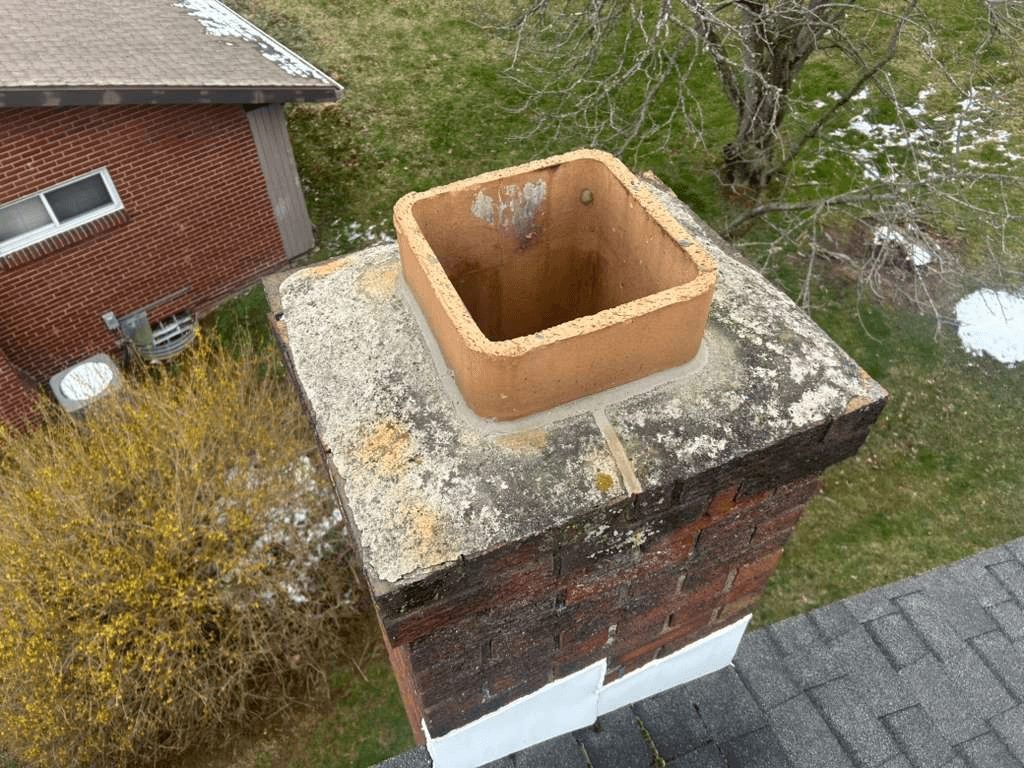
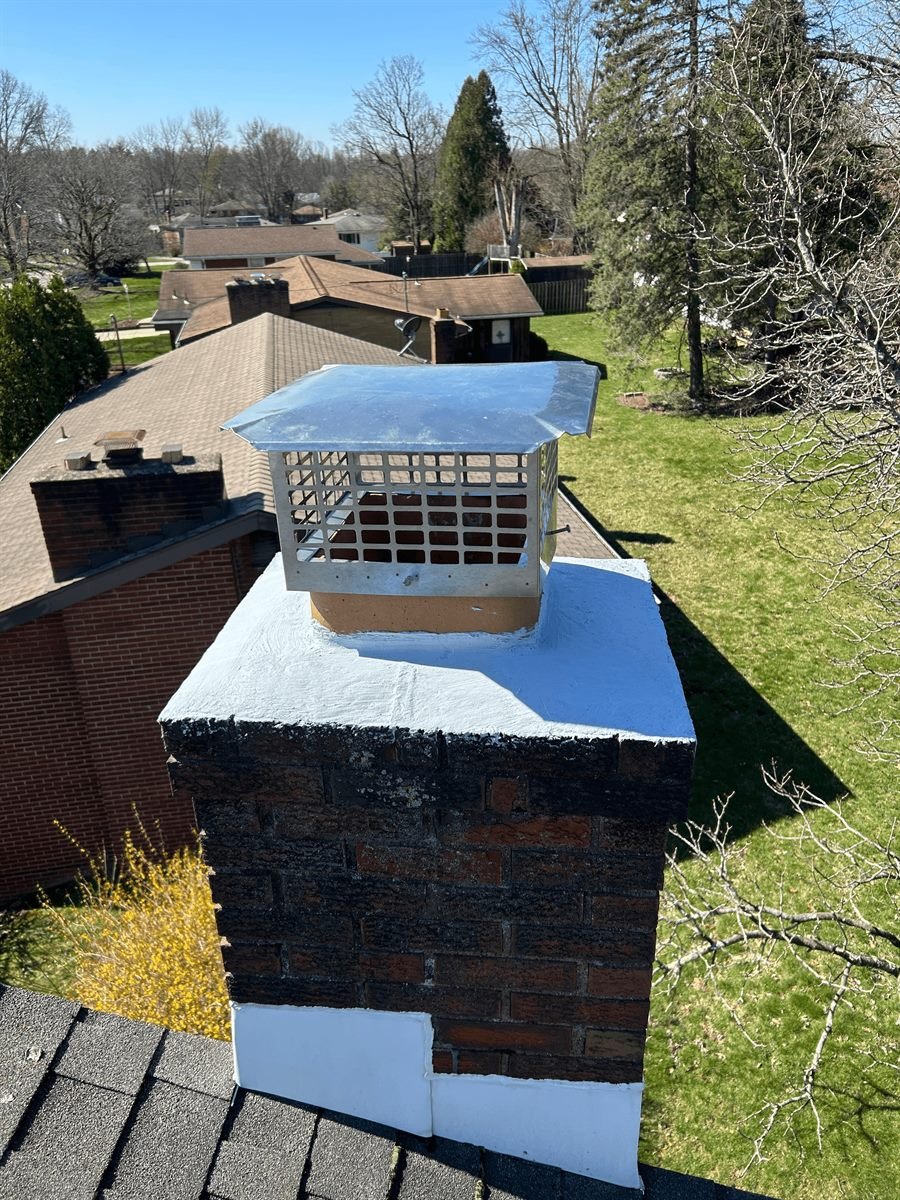
Here is a real one from a Pittsburgh roof. Before, you can see the bare crown: weathered, lichen growing across it, a seam cracking through the middle, and no cap on the flue. After, that same crown is sealed with a flexible waterproof coating, and I added a stainless steel cap to keep rain and animals out of the flue. That is the whole prevention package, and it is the difference between maintaining a chimney and rebuilding one.
How Do I Know If My Crown Is Bad?
You cannot get a good look at the crown from the ground, and that is the catch. But there are signs you can spot from inside and around the house:
- A brown water stain on the ceiling or wall near the chimney. That is water that already made it inside.
- Visible cracks or missing chunks up top, if you can see the crown from an upstairs window or with binoculars.
- Bits of masonry or grit showing up in the firebox.
- White, chalky staining on the outside brick. That is efflorescence, salt left behind as water moves through the masonry, and it means water is getting in.
If you are seeing any of that, the crown is already letting water through. And because it is so hard to see, the only way to really know its condition is to get someone up top to look. That is what a chimney inspection is for.
Get Your Crown Checked Before the Next Freeze
A crown coating is cheap insurance. A new ceiling is not. If your chimney is more than a few years old, or you are seeing any of the warning signs above, have the crown looked at before winter locks in another round of freeze-thaw.
Call The Chimney Experts INC at (412) 440-5871 or book an inspection through our contact page. I will get up top, tell you exactly what your crown needs, a coating or a rebuild, and show you the photos so you can decide with the facts in front of you.