If you have a brown ring on the ceiling near the fireplace, damp drywall along the chimney chase, or a musty smell in the room that shows up a day after heavy rain, water is getting into your chimney somewhere. It is not going to dry out and stop on its own.
I am Tom. I do this work myself. A chimney leak is a diagnosis problem before it is a repair problem, because five different failures put water in the same spot on your ceiling, and sealing the wrong one costs you a season. Here is what I look at, what each fix involves, and why waiting on this one is expensive in Pittsburgh specifically.
☎ Call (412) 440-5871 Free Estimate
Where the Water Is Actually Getting In
Almost every chimney leak I get called out for traces back to one of five things. Same stain on your ceiling, five different repairs, so the first job is telling them apart.
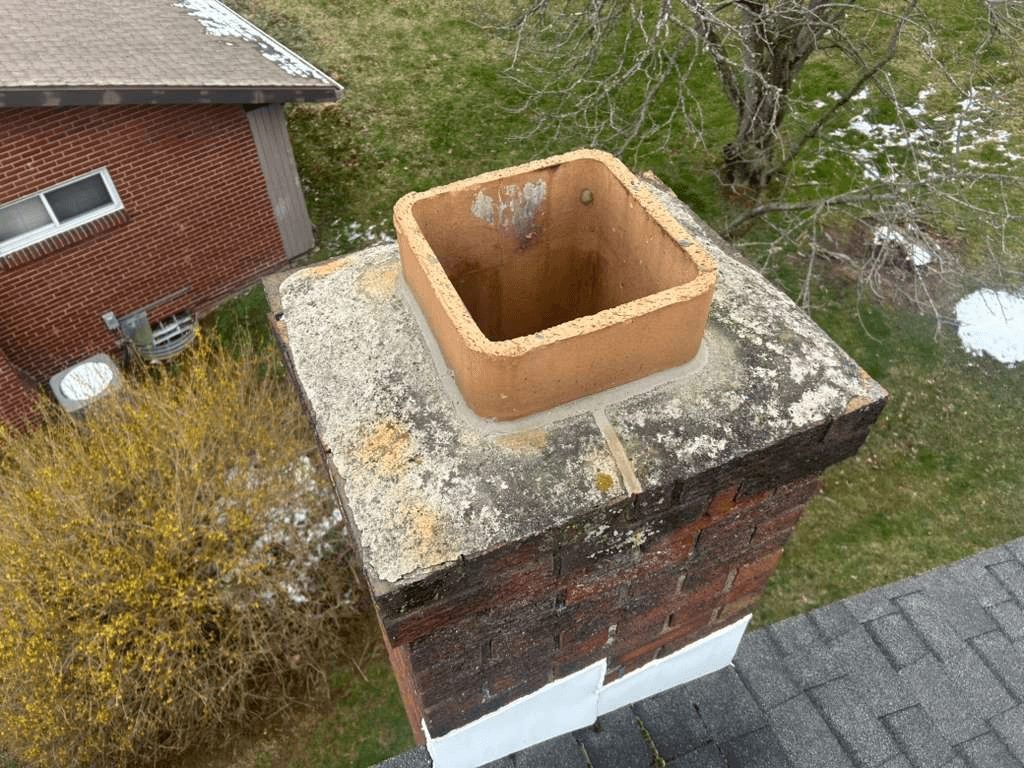
The Crown
The crown is the slab of concrete or mortar across the top of the chimney. It is the roof of the whole structure, and it is the most common leak source I find. It sits fully exposed, it is often built too thin from the start, and once it cracks, water runs straight down into the chimney's core where you cannot see it doing damage.
What you see: stains that show up well inside the house, sometimes a floor or two down from the chimney top. Efflorescence, the chalky white bloom, on the brick.
The fix: small cracks get sealed with a flexible crown coating that moves with the masonry instead of cracking again. A crown that is spalling apart or badly undersized gets rebuilt properly, with an overhang past the brick so water drips clear instead of running down the face.
A Bad Cap, or No Cap at All
The flue opening at the top is an open pipe pointed at the sky. Without a cap, every rain goes straight down it. I still find plenty of chimneys around here with no cap, or with a rusted one that has lost its top plate.
What you see: dampness or a strong wet-ash smell at the firebox after it rains. Sometimes water actually dripping into the fireplace.
The fix: a stainless cap sized to the flue. On a multi-flue chimney I will usually recommend a full-coverage cap that shelters the entire crown, which takes rain off the crown too. More on that on my chimney cap installation page.
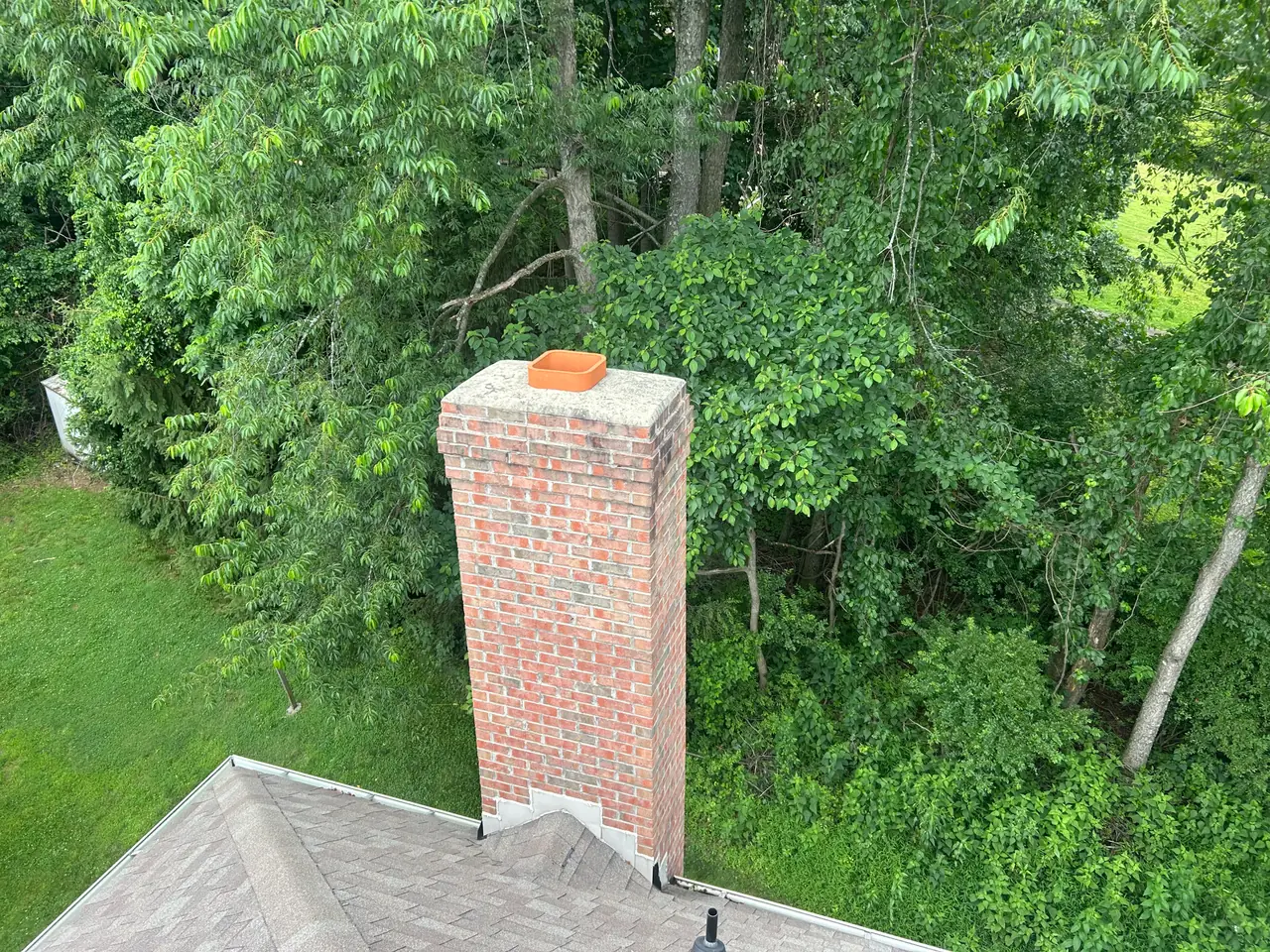
The Flashing
Flashing is the metal that seals the joint where the chimney passes through the roof. It is the second most common leak source I find, and it is the one most often blamed on the roof itself.
What you see: this is the telling one. If the stain is on the ceiling beside the chimney rather than at it, or shows up on the wall a few feet away, flashing is where I look first. It also tends to leak only in wind-driven rain.
The fix: pulling the failed flashing and installing it properly, with counterflashing set into a cut mortar joint rather than smeared over with caulk. Roofing tar over old flashing is a patch that buys a year. I work the chimney and the flashing where it meets the roof. Repairs out on the roof field itself are a roofer's job, and I will tell you plainly if that is what you actually have.
The Brick and the Masonry
Brick is porous. A chimney that has gone years without a water repellent, or one with faces already spalling, absorbs water through the wall itself and moves it inward. This is the leak with no single hole to point at.
What you see: a broad damp patch instead of a defined drip. White efflorescence across the exterior brick. Faces of bricks flaking or popping off.
The fix: replace the bricks that are too far gone, then treat the masonry with a breathable vapor-permeable water repellent. Breathable matters. A sealer that traps moisture inside the wall makes the freeze-thaw damage worse, not better, and I see chimneys that were waterproofed with the wrong product and are in worse shape for it.
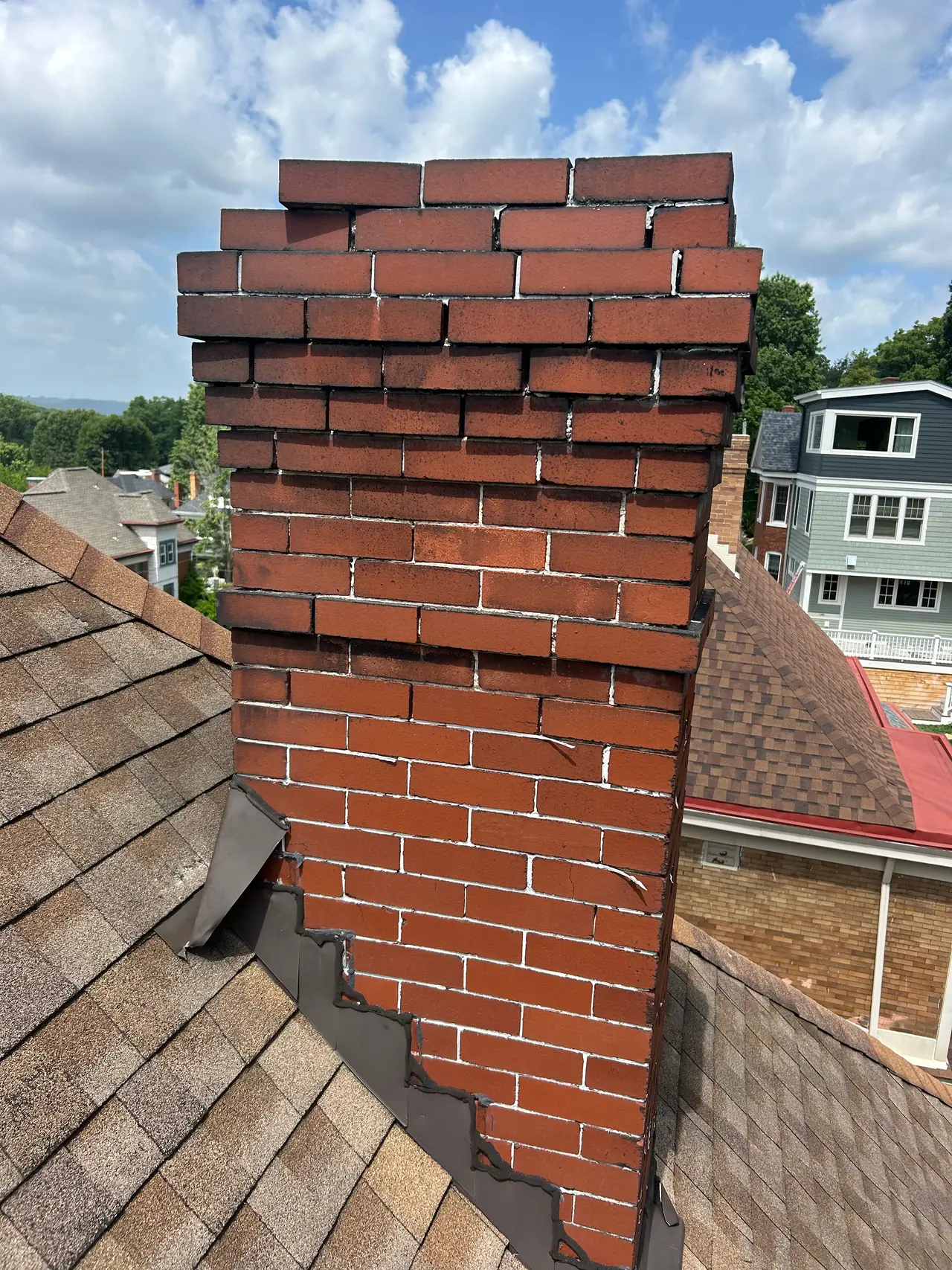
Open Mortar Joints
Mortar is softer than brick by design and it wears out first. Once joints recede or open up, every one of them is a channel walking water into the chimney.
What you see: joints you can dig a key into. Mortar sand at the base of the chimney after a storm.
The fix: repointing. Grind out the failed joint to depth and pack in fresh mortar matched to the existing work. Skim-coating over bad mortar without cutting it out is a cosmetic fix that traps the water already in there.
How I Find It
I do not guess and I do not start selling you a crown before I have looked.
I go up and inspect the chimney from the top down: crown, cap, flue opening, the brick faces on all four sides, the mortar joints, and the flashing at the roofline. Then I come inside and look at the stain itself, because the pattern tells me a lot. Where it sits relative to the chimney, whether it is a defined drip or a broad damp area, and whether it appears in every rain or only in a driving one all point at different sources.
Plenty of chimneys have more than one thing failing at once, and I would rather tell you that up front than fix one and have you call me back in April. If what you need is a full documented condition report rather than a leak diagnosis, that is a chimney inspection. If the water has been getting into the flue long enough to break down the liner, we should be talking about chimney relining, because a compromised liner is a safety issue, not just a water one.
A Chimney Leak Does Not Wait Here
This is the part I want you to take seriously.
Water in masonry is not a static problem in this climate. Every time the temperature crosses freezing, the water that soaked into a crack, a joint, or the crown expands as it turns to ice. That expansion pushes the crack a little wider. It thaws, more water gets into the bigger opening, and it freezes again. Pittsburgh runs that cycle over and over from late fall through early spring, and it does not take a hard winter to do it. It just takes the temperature crossing 32 degrees, back and forth, repeatedly.
So a hairline crack in a crown in October is a real crack by March, and next winter it works on a bigger opening. The same process is what turns a damp brick into a spalled one, and open joints into missing ones. A leak found in the fall is a sealed crown. The same leak left through two winters is a rebuilt crown and replaced brick.
There is no version of this where it stays the same size.
Why Homeowners Call Me
I am owner operated. When you call, you get me. I come out, I get on the roof, I do the diagnosis, and I do the repair. There is no salesman out first and no crew sent later who has not seen what I saw.
That matters more on a leak than on almost any other chimney job, because the whole thing turns on getting the source right. I will tell you straight if your leak is the crown and not the flashing, and I will tell you straight if I think what you have is a roof problem and not a chimney problem at all. I would rather lose the job than sell you a repair that does not stop the water.
Where I Work
I do chimney leak repair across Pittsburgh and the surrounding suburbs, including Mt. Lebanon, Fox Chapel, Penn Hills, and out through the Alle-Kiski Valley. You can see the full list of areas I cover. Older brick chimneys on the city's hillside neighborhoods are a good share of the leak calls I get, and they are exactly the kind of chimney I am on every week.