I’m a chimney tech, and a dryer vent runs on the same thing a chimney does: air that has to get out of the house. When you book dryer vent cleaning in Murrysville, PA, I’m the person who shows up, pulls the dryer out, and clears the whole run myself. Murrysville spread out into big single-family homes off Route 22, and on a lot of them the laundry sits on the second floor or down in a finished basement, a long way from the nearest outside wall. That means a long vent run, and a long run is where lint piles up. If your clothes are coming out damp or the top of the dryer is hot to the touch, that is what I fix.
☎ Call (412) 440-5871 Get a Free Estimate
Signs Your Dryer Vent Is Clogged
You do not need a meter to catch most of these. The clearest one is drying time. If a normal load takes two cycles to come out dry, the wet air has nowhere to go and it is backing up inside the duct. Here is the rest of what I tell people to watch for:
- Clothes are still damp, or hotter than usual, at the end of a cycle
- The dryer body, or the laundry room itself, feels hot and humid while it runs
- A musty or burning smell when the dryer is going
- Lint building up around the outside vent hood, or the flap not opening
- It has been more than a year since the vent was last cleaned
Any one of those means air is not moving the way it should. On a gas dryer it is more than damp clothes, because a vent that cannot exhaust is also holding back combustion gases that are supposed to leave the house.
The Fire and Carbon Monoxide Risk
Lint is dryer fuel. It is fine, dry, and it catches easily, and when it packs into a hot metal duct it becomes the fuel for a fire that starts inside your wall where you cannot see it. The U.S. Fire Administration reports roughly 2,900 clothes dryer fires nationwide each year and points to failure to clean them as the leading cause. On a gas dryer there is a second hazard: a blocked vent can push carbon monoxide back toward the house instead of outside. Neither one gives you much warning, which is why cleaning on a schedule beats waiting for a sign.
Why Murrysville Homes Clog Faster Than You Would Think
Murrysville is not city row homes. It is larger homes on wooded lots, a lot of them built in the subdivision boom from the 1960s through the 1990s off William Penn Highway, plus older farmhouses out toward Export and Delmont. A few things about how these homes are laid out make the vents pack up faster than the short, straight run on a newer starter house.
Long runs from upstairs and basement laundry
When the washer and dryer sit on the second floor or down in a finished basement instead of on an outside wall, the vent has to travel, sometimes twenty or thirty feet with several elbows, before it reaches daylight. Every elbow and every extra foot is a spot where lint drops out of the airstream and settles. A short run blows most of its lint outside. A long Murrysville run holds onto it.
Crushed transition duct behind the dryer
Where a dryer is pushed back tight against the wall, or stacked in a closet, the flexible transition duct behind it gets kinked and crushed. That pinch traps lint right at the start of the run and chokes airflow for the whole system. I straighten or replace that section when I find it.
Birds and nests in the outside vent
Murrysville is heavily wooded, and every spring birds find the exterior vent hood and build in it. A nest, or a flap that has rusted open, blocks the exhaust and invites more. I clear the hood out and make sure the flap actually opens and closes on its own.
Cold winters cake the lint in place
This is the part I know cold from chimney work. In a Westmoreland County winter you run the dryer hard, and that warm, wet air hits cold metal duct running through an unheated crawlspace or along a rim joist. It condenses. Damp lint does not blow out the end of the pipe, it sticks to the walls of the duct like wet felt and builds up layer over layer. It is the same condensation-and-buildup problem I deal with in a cold chimney flue, and it is why a vent that seemed fine in September is choked by February. Airflow, venting, and fire safety are what I work on all day on chimneys, so I bring the same inspection habits and the same tools straight to your dryer vent.
What I Do on a Dryer Vent Cleaning Visit
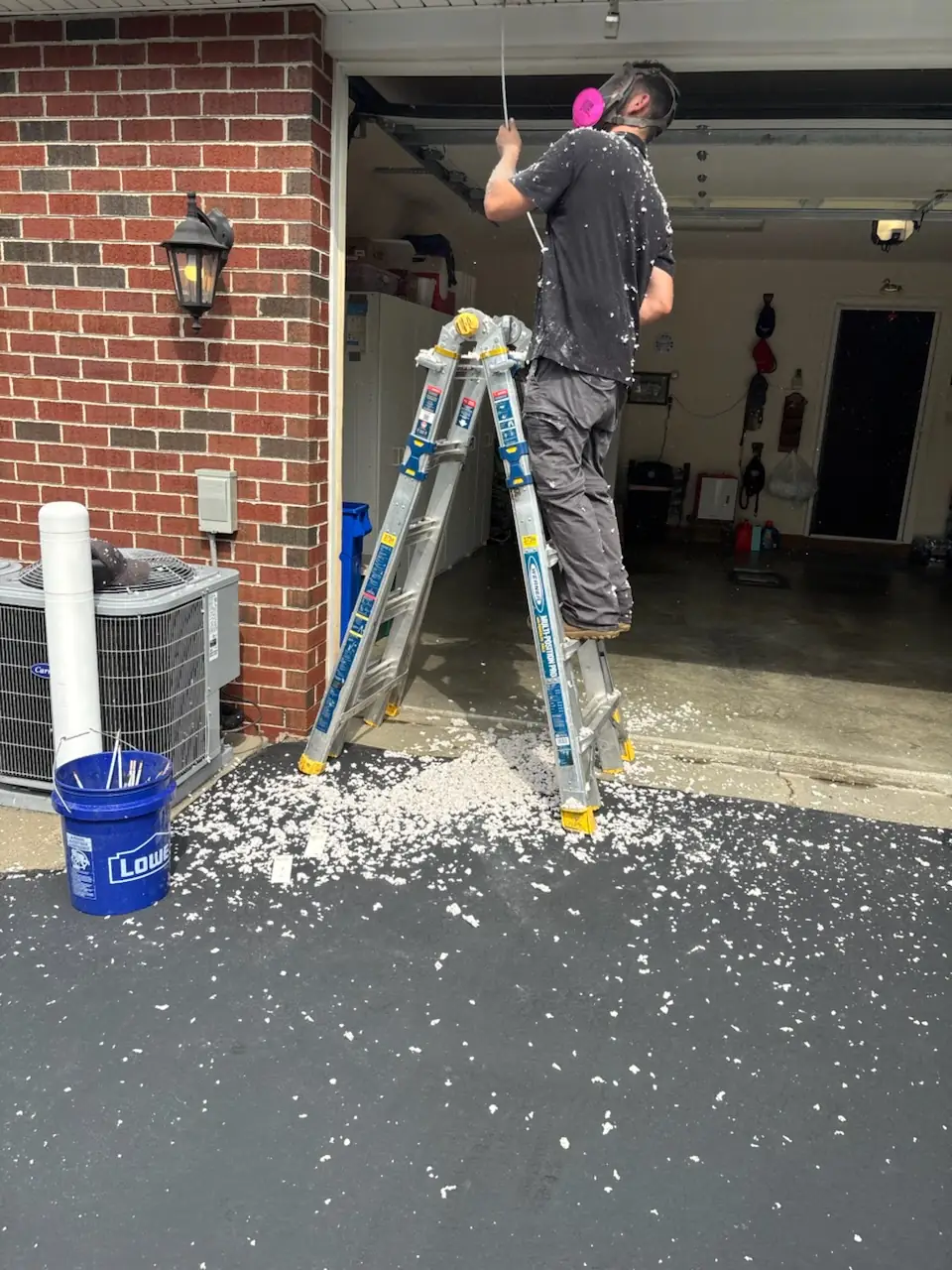
When I get to your place, I do not just run a brush in from outside and call it done. I pull the dryer out, disconnect it, and get at the whole run.
- I look first. I check the transition duct, the routing, and the outside hood so I know what I am dealing with, whether that is a crushed section, a disconnected joint, or a nest.
- I brush the full run. I use a rotary brush on a drive rod that follows the duct through every elbow, from the dryer connection all the way to the exterior, with a vacuum pulling the loosened lint out instead of packing it forward.
- I clear the hood. I clean the exterior vent, pull any nesting, and confirm the flap swings free.
- I reconnect and test. I hook the dryer back up, seal the connection, and run it to confirm strong airflow at the outside vent before I leave.
- I tell you what I saw. If the transition duct is crushed, or the run is too long or undersized to ever stay clear, you hear it from me with a straight recommendation, not a sales pitch.
This is the same eyes-on approach I bring to a chimney inspection, and the packed lint I pull out of a vent is not far off from the creosote I clear on a chimney sweep. You can also read more about how I handle dryer vent cleaning across the wider Pittsburgh area.
Dryer Vent Cleaning Across Murrysville and Nearby
Murrysville sits right in the run of towns I cover east of Pittsburgh. I clean vents across Murrysville and the neighborhoods off Route 22, plus Export, Delmont, Monroeville, Plum, Penn Township, Level Green, and out through the rest of Westmoreland County. If your dryer has been taking two cycles to finish a load, give me a call and I will get the run cleared.