Creosote is what wood smoke leaves behind on the inside of your flue, and it does not all look or behave the same way. It shows up in three stages, and the stage it has reached decides whether I can brush it out on a routine visit or whether we are into chemicals, return trips, and sometimes a new liner. I have scraped all three out of chimneys around Pittsburgh, so let me put a light up there and show you what each one actually looks like.
Stage One: Loose, Sooty, and Easy to Brush Out
Stage one is the deposit almost every working chimney has. It is a dry, dull, powdery layer, black shading toward brown, with a soft velvety look to it. Run a light across it and it looks more like a heavy dusting of ash than anything solid.
To the brush it puts up no fight at all. I push the rods up, the bristles knock it loose, and it falls like coffee grounds into the drop cloth below. There is nothing to chip or scour. It comes off in a light shower and the vacuum catches the rest.
This stage forms when your fires are burning fairly clean. A hot, well-fed fire sends most of its fuel up as heat and gas, and only the little bit of smoke that cools on the flue wall leaves this thin, sooty film. It is the normal result of using a fireplace a normal amount. As chimney deposits go, stage one is the least dangerous, but it is still fuel, and if you let it keep building it packs down and darkens toward the harder stages. That is the whole point of a yearly cleaning: keep it at stage one.
Stage Two: Hard, Shiny Flakes With a Tar Feel
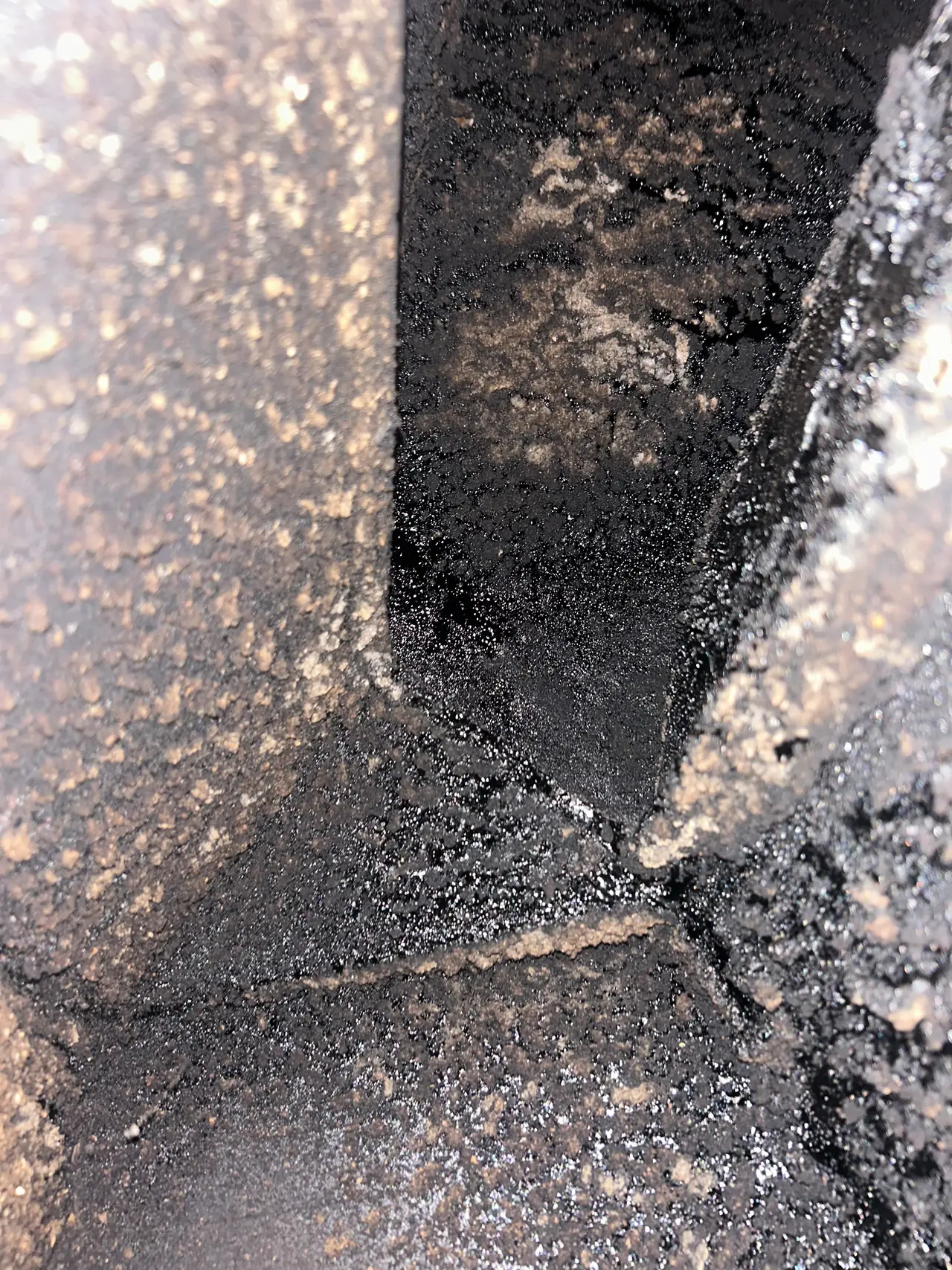
Stage two looks different the second the light hits it. Instead of a soft dusting, you see black flakes with a shine to them, brittle and thicker, stuck to the tile like cornflakes or little shards of tar paper. The color is darker and glossier than stage one.

It feels different too. This does not powder off. It is hard, it catches the brush, and it breaks away in pieces rather than dust. Get a flake between your fingers and there is a tacky, tarry quality under the crust. That tar is the tell. It means unburned smoke condensed and hardened on the wall instead of drying to a light soot.
Stage two forms when smoke cools too fast before it leaves the flue. Damped-down fires that smolder, wood that was not dry enough, a flue running cold, all of it loads the smoke with more unburned tar, and that tar bakes onto the tile. A standard brush mostly skates across it, so I switch to rotary work: powered rods spinning a chain head or a heavy cutting brush that scours the flue wall clean, usually over several passes. This stage is not something to sit on. It is concentrated fuel, and it lights far easier than a light soot.
Stage Three: Glazed, Hardened, and the One I Worry About
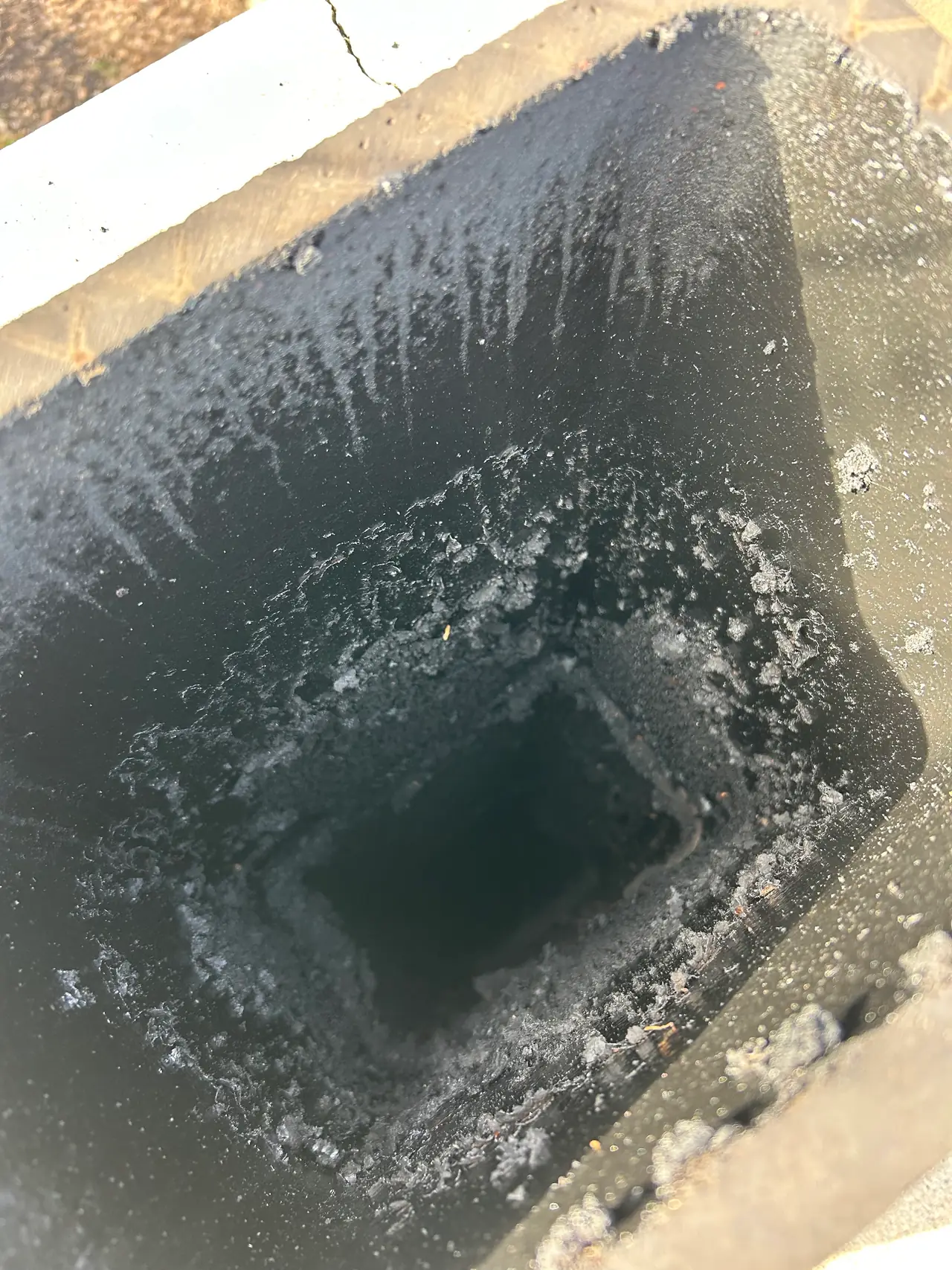
Stage three is not flakes anymore. It is a continuous, glossy black coating that looks like tar or melted candle wax ran down the tile and froze there. You can often see the drips and ripples in it, frozen mid-run. It looks almost painted on, and it can be thin and slick or built up thick enough to choke the flue.
To the touch it is rock hard and glassy. The brush slides right over it. I cannot chip it with a hand tool, and rotary chains that tear through stage two just polish it. That is what tells me I am looking at a true glaze and not just heavy stage two.
It forms the same way stage two does, from cool, smoldering, tar-heavy smoke, but repeated season after season until the tar bakes into one solid, fused layer. Getting it off is a different job. Brushing and rotary work alone will not move a real glaze, so I apply a creosote-modifying treatment that dries the glaze out and turns it brittle, then come back and sweep it down, and a heavy glaze usually takes more than one visit to bring off. When it has hardened into the tile beyond what treatment can reach, or the heat of a past fire has already cracked the liner underneath, the honest answer is relining the chimney rather than chasing a coating that is now part of the flue.
Stage three is the one I worry about, and it is the most dangerous by a wide margin. This glassy layer is exactly what a chimney fire feeds on. A stage three fire burns hot enough to crack clay tiles and ruin a liner, and it can push heat into the framing around the chimney. NFPA 211, the national standard for chimneys and vents, is clear that a flue in this condition needs to be cleaned before it is used again. If you have a glaze, running another fire on it is the gamble you do not want to take.
Why Pittsburgh Chimneys Build Creosote Faster
A lot of what I pull out of local flues comes down to how the houses are built and how people burn. Plenty of older Pittsburgh homes have the chimney run up an outside wall instead of through the middle of the house. That masonry sits out in the cold all winter, so the flue never really warms up, and smoke hitting a cold flue cools fast and condenses. That is stage two and stage three weather.
Wet wood is the other half of it. We get damp air sitting in the river valleys, split wood soaks up that humidity under a tarp, and green or wet wood smolders instead of burning clean. Smoldering is exactly what loads the smoke with tar. And then there are the inserts. A wood stove insert dropped into an old open fireplace and damped down to hold a fire overnight spends hours smoldering at low temperature. That slow, cool smoke is the fastest way I know to build a glaze, and I see it constantly on inserts that never get looked at.
What You Should Actually Do About It
The fix is not complicated. Have the chimney inspected and cleaned once a year. NFPA 211 calls for at least a yearly inspection, and that visit is where I catch stage two before it turns into stage three. A yearly Pittsburgh chimney sweep keeps the buildup down at stage one, where it stays soft and comes off with a brush, instead of letting it harden into something that needs chemicals or a new liner.
Between visits, help yourself out. Burn wood that has dried a year or more, build hot bright fires instead of choking them down to a smolder, and give the fire enough air to keep the flue warm. If you switched your heat from oil to gas, condensation in an oversized flue is a related buildup problem, and I walk through it in what an oil-to-gas conversion does to your chimney. And if you are already seeing hard flakes drop into the firebox or you smell a heavy campfire odor coming off the fireplace, do not run another fire until someone has looked at the flue. Caught early, creosote is a routine sweep. Left alone, it is a relining.